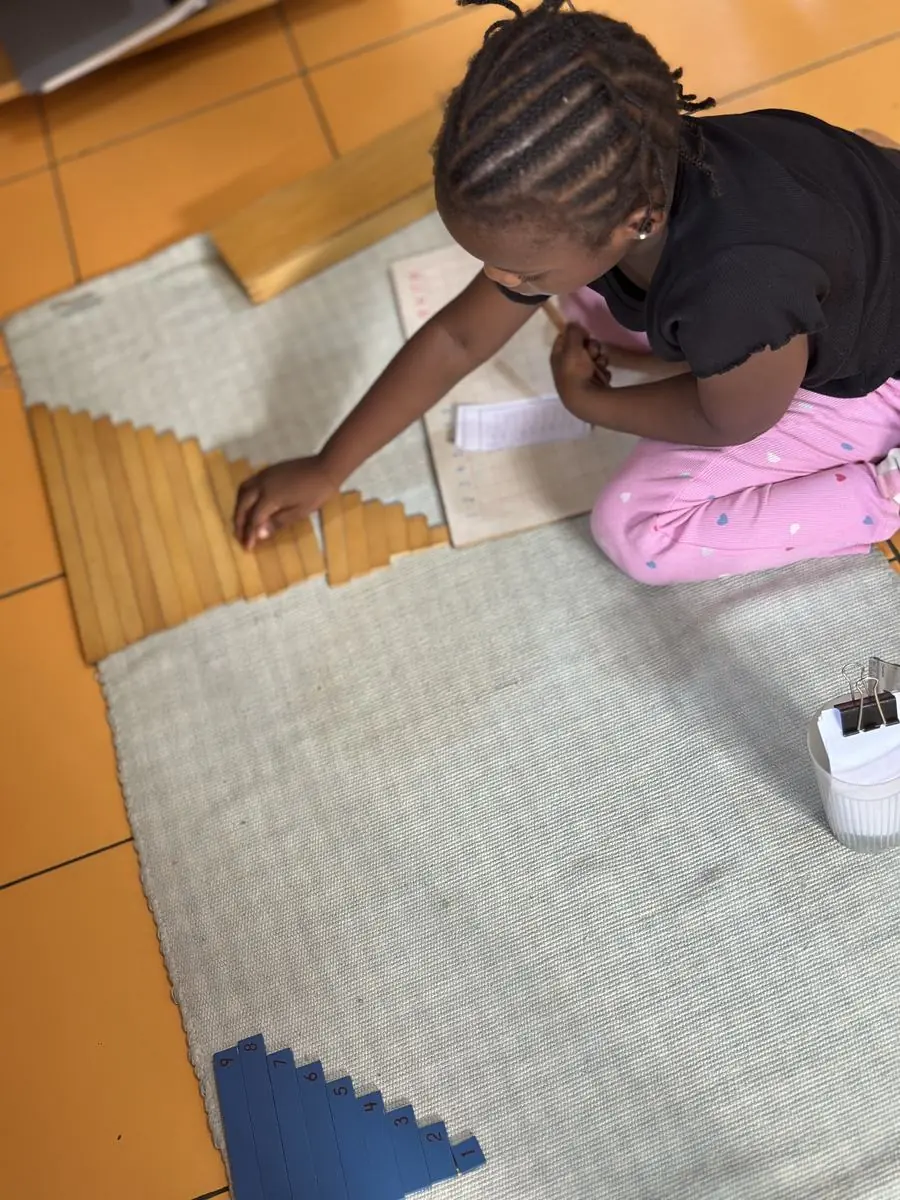
Montessori learning does not have to end when your child leaves the classroom. Many of the principles children practise at school, such as independence, responsibility and curiosity, can be encouraged naturally at home.
You do not need to recreate a Montessori classroom. Small changes to everyday routines can give your child more opportunities to learn, make choices and build confidence.
Encourage Independence in Everyday Tasks
Children learn a great deal when they are given the opportunity to do things for themselves. Instead of stepping in immediately, allow your child to take part in simple, age-appropriate tasks.
This could include choosing their clothes, putting away toys, carrying their plate to the table or helping to organise their belongings.
The goal is not perfection. It is about giving children the time and space to practise, make mistakes and gradually become more confident in their abilities.
Make Mealtimes an Opportunity to Learn
Mealtimes provide many opportunities for children to develop practical life skills.
Depending on their age, children can help set the table, pour their own water, serve small portions of food or clear their dishes when they are finished. Older children can also participate in simple food preparation, such as washing fruit or measuring ingredients.
These everyday activities help children develop coordination, concentration and a sense of responsibility while allowing them to contribute meaningfully to family life.
Create a Calm and Accessible Home Environment
A Montessori-inspired home does not need to be filled with special materials. What matters most is creating an environment where children can safely access the things they use regularly.
Consider placing books, toys and everyday items at your child’s height. Keep choices simple and organise belongings so that everything has a clear place.
A calm, organised environment can make it easier for children to choose activities independently, concentrate on what they are doing and learn to return things when they are finished.
Allow Time for Exploration
Children are naturally curious, and some of the best learning happens when they have time to explore without being rushed.
Give your child opportunities for open-ended play, reading, drawing, building and spending time outdoors. When they ask questions, encourage them to think about possible answers rather than always providing the solution immediately.
Allowing children to investigate, experiment and solve simple problems helps develop creativity, confidence and a genuine love of learning.
Build Calm and Consistent Routines
Predictable routines help children understand what to expect and encourage them to take greater responsibility for themselves.
A simple bedtime routine, for example, might include putting away toys, choosing pyjamas, brushing teeth, selecting a book and preparing for sleep.
When routines are consistent and children are actively involved in them, everyday moments become opportunities to practise independence and develop healthy habits.
Bringing Montessori Into Everyday Life
Supporting Montessori learning at home is less about creating the perfect environment and more about how we involve children in everyday life.
Give them opportunities to participate, make appropriate choices, explore their interests and complete tasks independently. Most importantly, allow them the time they need to learn at their own pace.
By bringing these simple principles into daily routines, families can reinforce the skills children develop at school and help nurture capable, curious and confident learners.
Want to see these principles in the classroom?
Book a free tour and watch an AMI-certified guide bring this same approach to life at Aquila Nidus.
Book a Free Tour