
ANM’s Children’s House Montessori Program
Children’s House Program
Ages 3 to 6 yearsA prepared environment where children learn to think, choose, create and contribute.
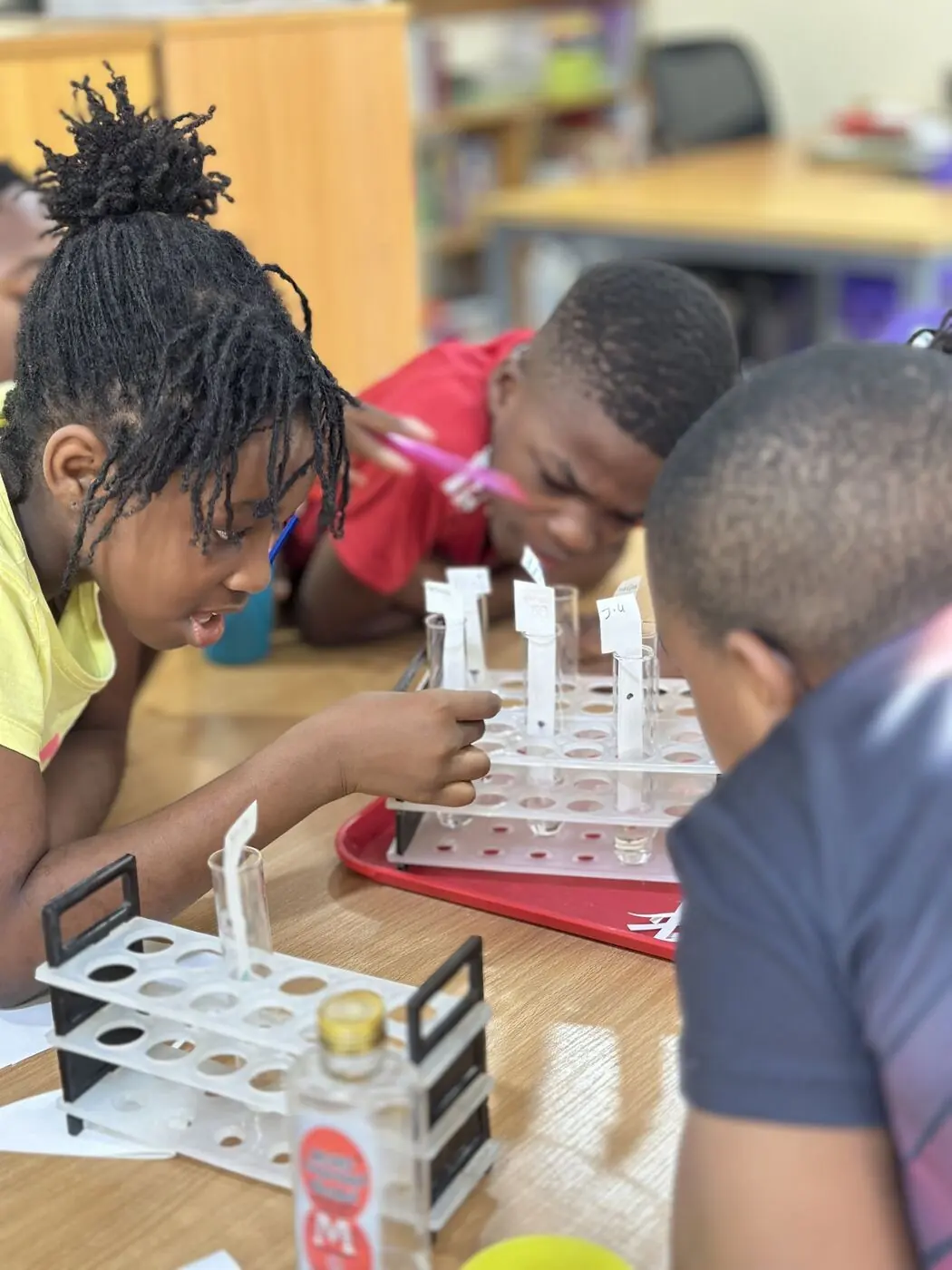
What is a Montessori Children’s House?
The Montessori environment for children aged approximately three to six.
It is a carefully prepared, mixed-age community where children learn through purposeful activity, hands-on materials, relationships, movement and sustained periods of concentration.
Independent thinkers and learners
Rather than organising the day mainly around a sequence of teacher-led lessons, the Children’s House is designed to help children become increasingly independent thinkers and learners. The adult prepares the environment, observes the children, gives precise presentations and supports each child according to their developmental needs.
At Aquila Nidus
Our Children’s House is built around the Montessori areas of Practical Life, Sensorial, Language, Mathematics and Cultural Studies, alongside opportunities for art, music, movement, outdoor experiences and social development.
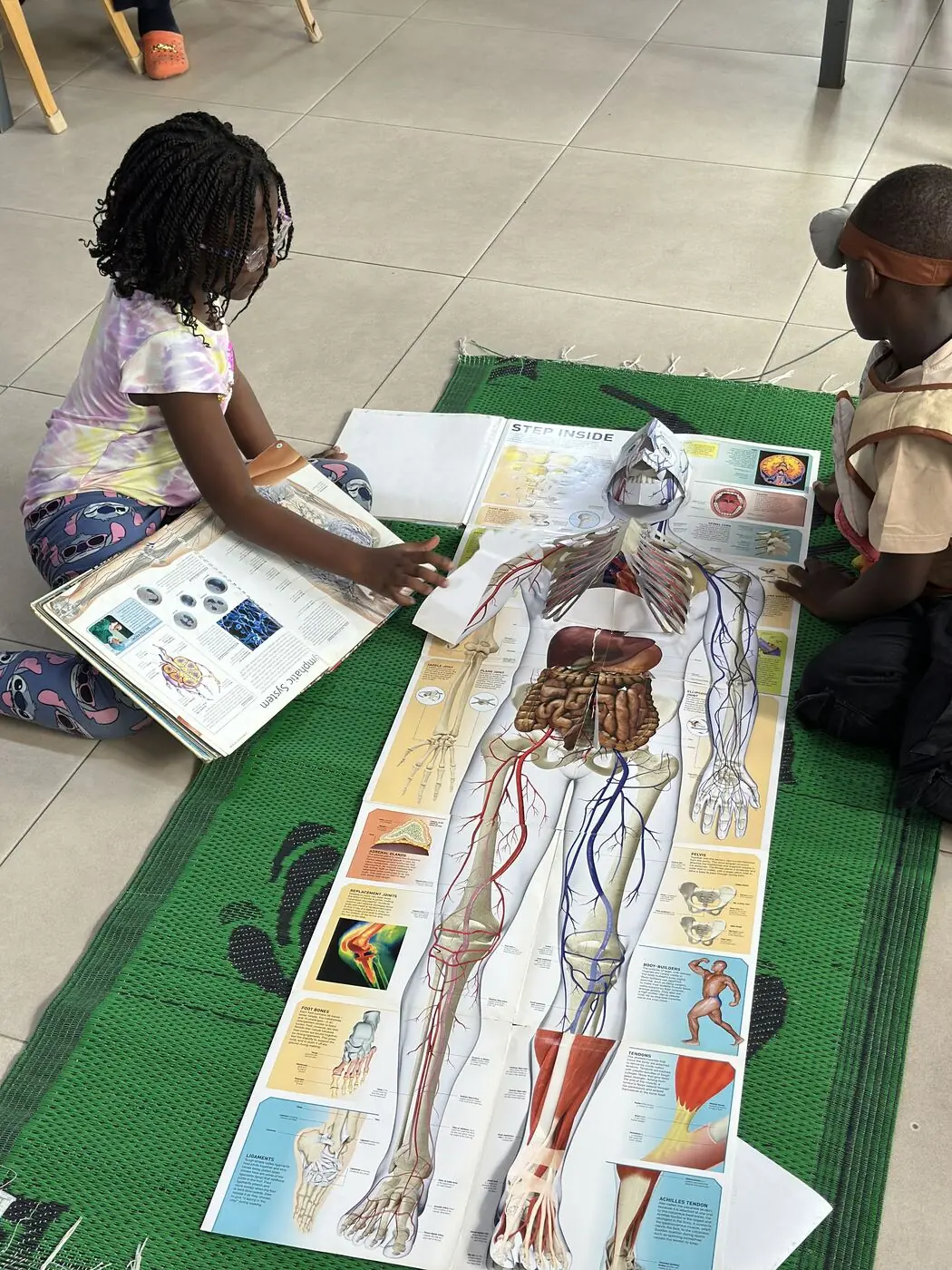
Why the 3-6 years are so important
Between three and six, children develop rapidly in language, reasoning, movement, social understanding, independence and their ability to concentrate. Montessori recognises the child as an active constructor of knowledge during this period.
The goal is not simply to teach children what to know before primary school. It is to help them develop the habits and capabilities that allow them to learn.
Those habits include concentration, curiosity, independence, order, problem-solving, communication, self-discipline and joy in meaningful work.
The child who has felt a strong love for his surroundings and for all living creatures, who has discovered joy and enthusiasm in work, gives us reason to hope that humanity can develop in a new direction.
Maria Montessori
What makes a Montessori Children’s House different?
A carefully prepared environment
Everything has a purpose and a place. Furniture is accessible to children, materials are arranged attractively and activities are designed to encourage independent choice and purposeful work.
A three-hour uninterrupted work cycle
Children have extended time to choose work, receive lessons, practise, repeat, concentrate and complete their work without repeated whole-group transitions.
A mixed-age community
Children learn together across a three-year age span. Younger children observe older ones, while older children deepen their understanding by leading and helping others.
The Montessori materials
Concrete, purposeful and sequenced. Children discover concepts through their hands, with room for repetition, refinement and self-correction.
The prepared adult
The Montessori guide observes carefully, presents lessons precisely, protects concentration and knows when to intervene and when to step back.
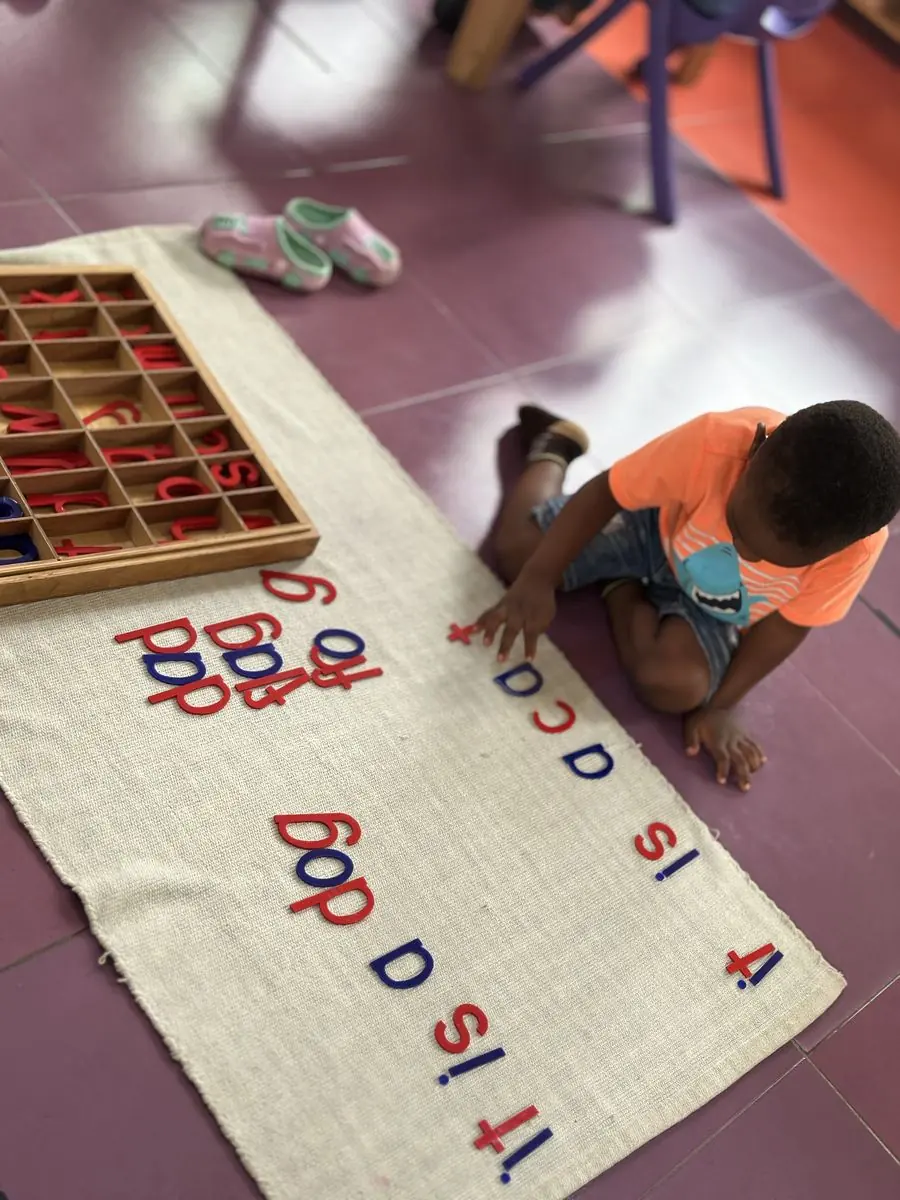
Choice with responsibility
Children have meaningful freedom within clear boundaries. They choose appropriate work, care for materials, respect others and contribute to the community.
Learning through doing
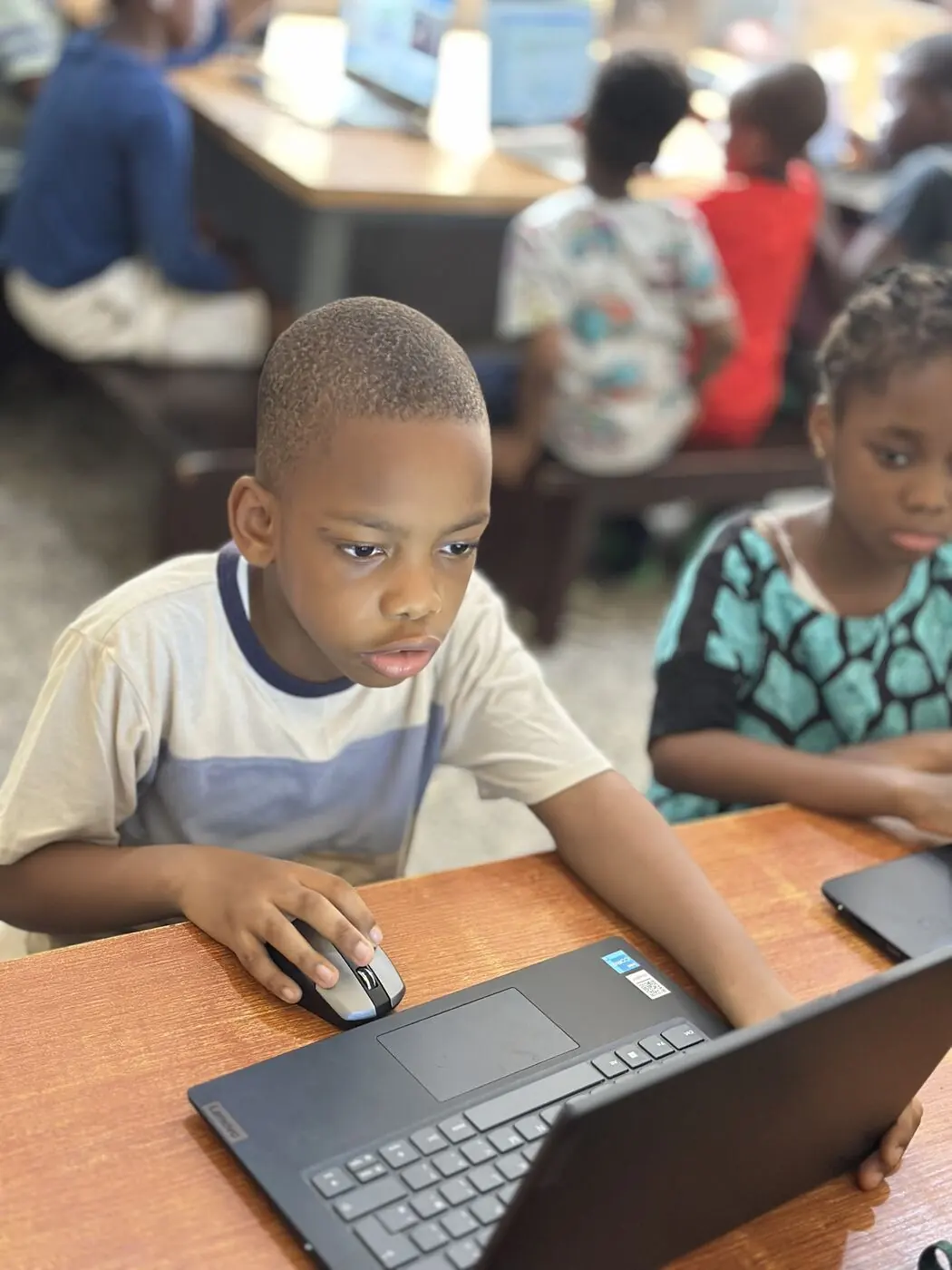
Children handle, manipulate, classify, count, read, write, investigate and explore concepts through active engagement.
Education for independence
The environment lets children do more for themselves rather than depending on an adult for every step.
Montessori Children’s House vs. a regular preschool programme
A conventional preschool can provide a strong early-years education, and programmes differ significantly in quality and philosophy. The comparison below describes the Montessori model rather than suggesting that every conventional preschool operates in the same way.
| Area | Many conventional preschool models | Montessori Children’s House |
|---|---|---|
| Class structure | Conventional preschoolOften organised by a narrow age group | Montessori Children’s HouseMixed-age community, generally 3-6 |
| Teacher’s role | Conventional preschoolTeacher often leads the whole group through planned activities | Montessori Children’s HouseGuide observes, presents individual and small-group lessons and protects independent work |
| Learning pace | Conventional preschoolProgramme may move the group through planned topics | Montessori Children’s HouseChild can repeat, practise and progress according to readiness |
| Daily rhythm | Conventional preschoolFrequent transitions between activities | Montessori Children’s HouseLong, uninterrupted work cycle supports concentration |
| Curriculum | Conventional preschoolOften topic- or theme-led with planned group activities | Montessori Children’s HouseIntegrated Montessori curriculum with sequenced materials and purposeful activity |
| Choice | Conventional preschoolOften limited to designated activity periods | Montessori Children’s HouseMeaningful choice within clear limits throughout the work cycle |
| Materials | Conventional preschoolMay include toys, worksheets and teacher-created resources | Montessori Children’s HouseSpecially designed Montessori materials with a clear developmental purpose |
| Independence | Conventional preschoolEncouraged as part of classroom routines | Montessori Children’s HouseA central educational aim built into the environment |
| Assessment | Conventional preschoolMay rely more heavily on group outcomes, tasks or formal assessments | Montessori Children’s HouseObservation of individual development, progress and mastery informs the guide’s work |
| Social learning | Conventional preschoolOften teacher-directed group interaction | Montessori Children’s HouseMixed-age community encourages modelling, collaboration, leadership and responsibility |
The Montessori Children’s House curriculum
Practical Life
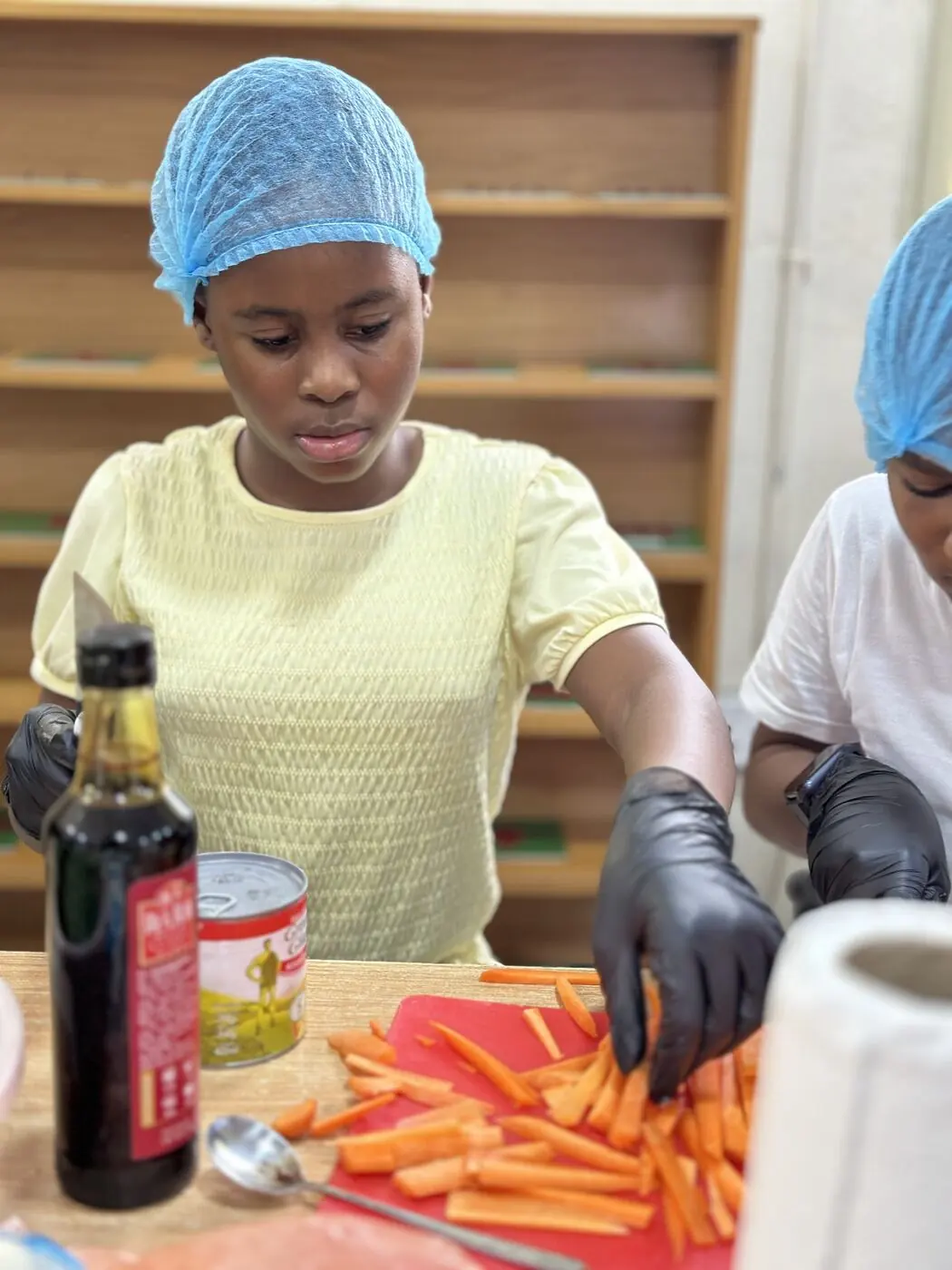
Coordination, concentration, order and independence through pouring, transferring, dressing, food preparation, cleaning and caring for the environment.
Sensorial
Children refine their ability to observe, discriminate, classify and organise information through materials exploring size, shape, colour, texture, sound and dimension.
Language
Spoken language, vocabulary, phonological awareness, reading and writing, built through a carefully sequenced progression.
Mathematics
From concrete experiences to increasingly abstract understanding, including quantity, number, operations and the decimal system.
Cultural Studies
Geography, history, science, nature, art, music and the wider world, developing a sense of connection and curiosity.
Grace, Courtesy and Community
Living respectfully with others, caring for shared spaces, communicating appropriately and contributing to the community.
The benefits for your child
Deep concentration
The uninterrupted work cycle gives children time to become absorbed in meaningful activity and develop sustained attention.
Genuine independence
Children learn to choose, begin, complete and care for their work, and to manage many parts of daily life on their own.
Strong foundations in literacy and maths
The materials move children from concrete experience towards abstraction, so concepts are understood rather than simply memorised.
Confidence and competence
Children repeatedly experience solving problems, mastering skills and discovering that effort leads to progress.
Self-discipline
Freedom within clear limits lets children practise responsible choices, waiting, persisting and respecting the needs of others.
Love of learning
Children explore questions, follow interests, repeat work and discover new challenges, rather than learning only for external rewards.
Social maturity
The mixed-age community gives children chances to observe, collaborate, help younger classmates, seek help and develop leadership.
Problem-solving and critical thinking
Materials and situations invite children to analyse, compare, sequence, classify, reason and find solutions.
Respect for the individual child
The adult introduces lessons when each child is ready, rather than expecting every child to master the same skill at the same time.
Preparation for life beyond Montessori
Academic knowledge alongside executive-function skills, communication, independence, adaptability and responsibility for the next stage.
What a day at Aquila Nidus Children’s House may include
- Arrival and settling into the prepared environment.
- An extended three-hour morning work cycle.
- Individual and small-group Montessori presentations.
- Practical Life, Sensorial, Language, Mathematics and Cultural work.
- Outdoor movement and opportunities to connect with nature.
- Jesus Time.
- Meals and routines that encourage independence and social responsibility.
- Group experiences such as music, stories, art, movement or community activities.
- An afternoon work period and continued opportunities for purposeful learning.
- Extracurricular activities after the core school day, where enrolled.
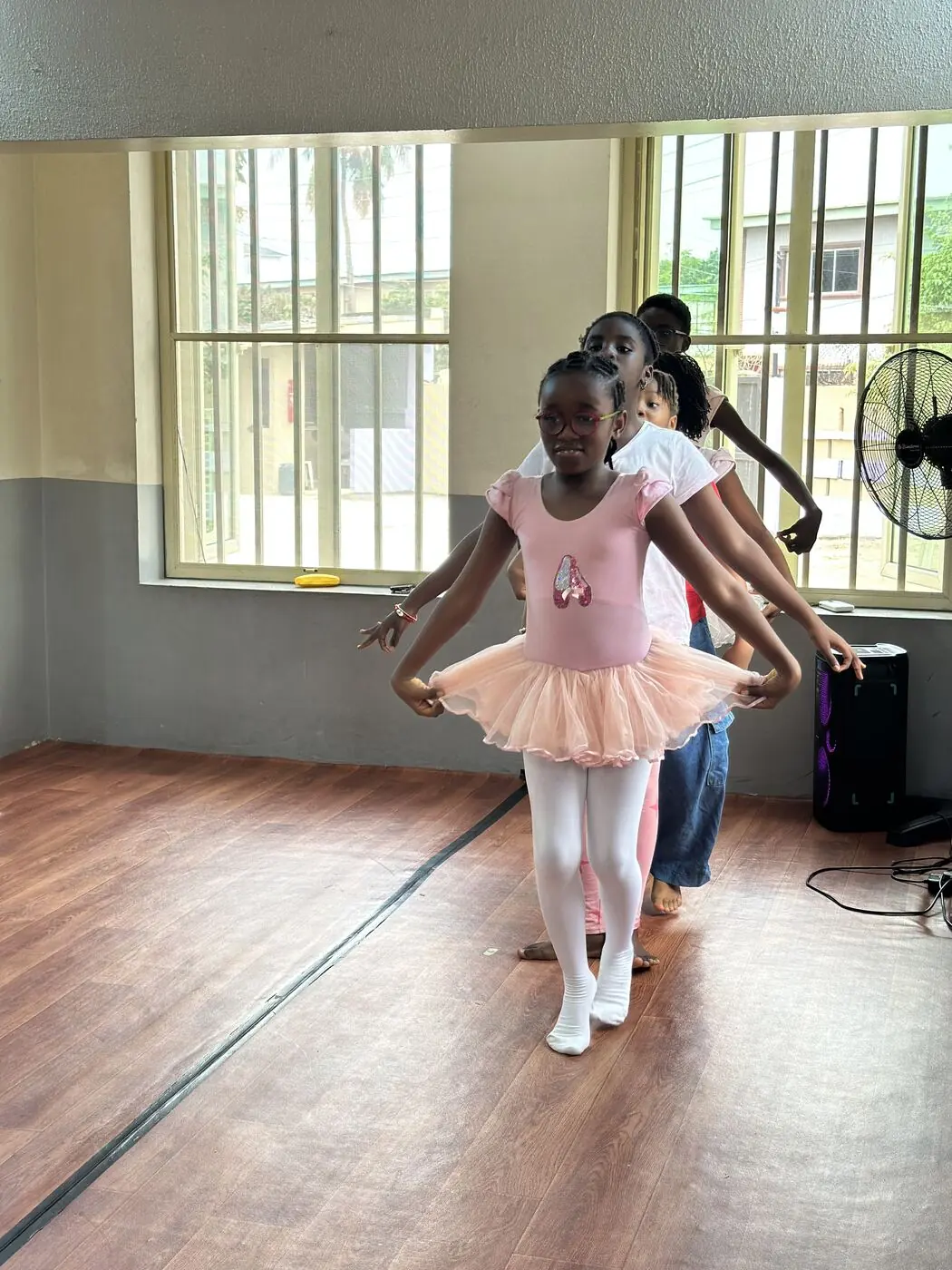

The Montessori guide makes the difference
A Montessori classroom is not defined simply by having Montessori materials. The adult is central. A trained Montessori guide understands child development, observes each child, knows the sequence of the materials and presents them with precision.
The guide does not need to stand at the front of the room all day. Much of the work happens through observation, individual presentations, careful preparation of the environment and knowing when to allow a child to work independently.
Why the mixed-age community matters
A three-year age span creates a natural community of learners. Younger children have older children to observe and learn from. Older children have opportunities to consolidate knowledge, model behaviour and take responsibility. Children are not learning only from the adult; they learn from one another.
This also reduces the pressure to compare every child against an identical age-based timetable. The community makes room for different strengths, interests and rates of development.
Questions to ask when choosing a Children’s House
- Are the lead guides formally trained in Montessori for ages 3-6?
- Is there a genuine uninterrupted work cycle each day?
- Are children given meaningful choice within clear boundaries?
- Is the classroom mixed-age?
- Are Montessori materials complete, authentic and used according to their purpose?
- How does the guide observe and track each child’s progress?
- How are literacy and mathematics taught?
- How are independence, grace and courtesy and social development supported?
- How does the school communicate with parents about their child’s development?
- Does the classroom feel calm, purposeful, orderly and respectful when you visit?
Aquila Nidus: preparing children for life, not just the next class
Our Children’s House is designed to nurture the whole child. We want children to leave the 3-6 environment not only knowing how to read, write and work with numbers, but also knowing how to think, make choices, solve problems, communicate, care for themselves, contribute to a community and approach learning with confidence.
Our aim is to give every child the time, guidance and environment needed to develop their unique potential while experiencing the joy and dignity of meaningful work.
“Help me to do it myself.”
The spirit of Montessori independence
Meet our Children’s House educators
The guides who care for your child from three to six years.

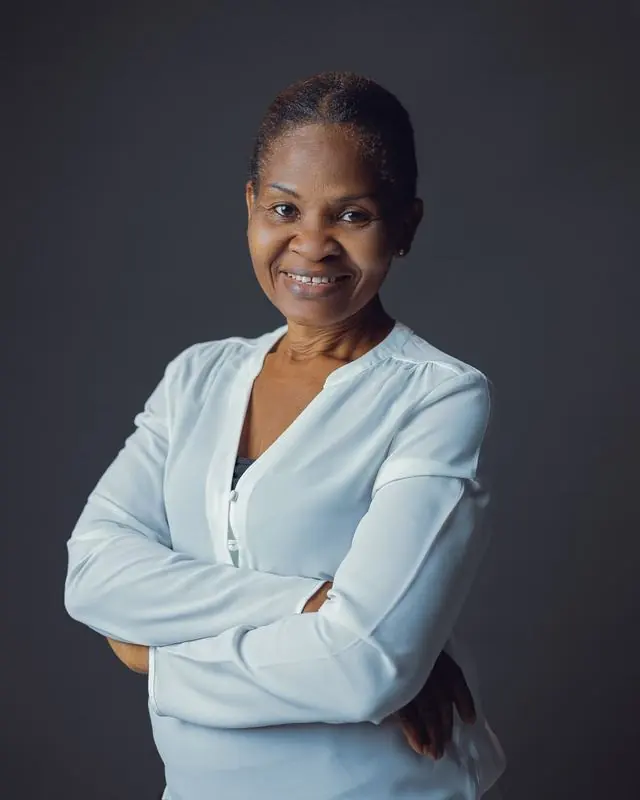
Winifred Akerele
Children’s House Guide
Blessing Ugbo
Children’s House Guide

Ogunsemore Blessing
Children’s House Assistant

Lasisi Omodolapo
Children’s House Assistant
Visit our prepared environment
Tours run on Tuesdays and Thursdays in small, unhurried sessions so your questions get real answers.
Or speak with admissions directly on +234 708 186 4078
What parents say about Aquila Nidus Montessori
“Since joining Aquila Nidus Montessori School in May 2026, our daughter has shown remarkable improvements in her speech, manners, and participation in daily activities. We are especially grateful for her teacher’s attentiveness and the early professional support that has contributed to her progress.
We love how the school nurtures each child’s individual learning needs while upholding Christian values. We wholeheartedly recommend Aquila Nidus to parents seeking a strong foundation for their children.”
Ayooluwa Samuel-Adeoye
“Since joining Aquila Nidus Montessori School, our daughter has adjusted wonderfully to her new environment. She no longer cries at drop-off, is now fully potty trained, and has made noticeable progress in her speech and confidence.
We are happy to see her growing, becoming more independent, and settling in so well.”
Bewaji Odetoyin
Toddler Parent
“I’m a Montessori director myself, so I understand and appreciate authentic Montessori when I see one. That’s the confidence I had putting her here. She has grown way beyond what her average age would know, in a very safe and child-friendly environment. I’m not afraid of her future, because I know she has a very good foundation.”
Oluwaseun
Tomisin’s mom
“Aquila does the proper Montessori. That’s why we love it. They use the actual materials, they follow the actual curriculum. It’s not blended or traditional in any way, it’s purely Montessori. And my kids love to come here. They’re always happy to come to school.”
Ibukun
Ire and Desire’s mom
“I’ve recommended Aquila to so many parents who eventually enrolled their children. My son finished here and Janelle too, and it has impacted their lives creatively, intellectually, socially, mentally, in so many ways. I’ve watched Janelle grow and there’s been a big difference, academically and otherwise. I would recommend this school one hundred percent to any parent looking for a real Montessori school.”
Mrs Onyenwe
Janelle’s mom
“I had gone around looking at schools for my kids, but when I got to Aquila Nidus I was amazed at the level of discipline I found. They are intentional about the children. Teiora started at the crèche and I was impressed right from there, at the way they took care of the children. Today she is graduating. I’m thankful to the school, and I pray my son who is still here goes through the same journey.”
Mrs Uzomba
Teiora’s mother
“It has been a wonderful journey since Bukunmi joined Aquila Nidus. He loves his friends, he has improved in his studies, and he has become more confident than before. As a parent I have really enjoyed our experience here, and I’m grateful to have come across the school.”
Sunsola
Bukunmi’s mother
“What I will remember most is the warmth. Aquila is a small community, but it’s home. All the children are our children. There’s a true spirit of community among the children and even among the parents. We see ourselves as one big family.”
Mrs Olaniyi
Tofunmi’s mother